2025 Grant
Program Highlights
Bicycle and Pedestrian Safety
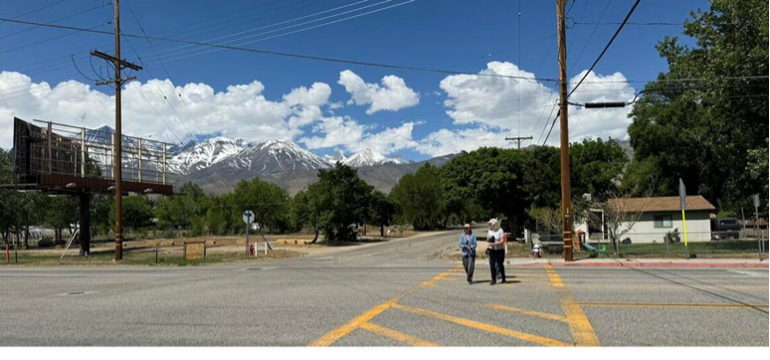
UC Berkeley SafeTREC Complete Streets Safety Assessments: Prioritizing Safer Speed, Community Pedestrian and Bicyclist Safety Program (CPBSP)
UC Berkeley Safe Transportation Research and Education Center (SafeTREC) conducted Complete Streets Safety Assessments (CSSA) across 12 counties, including a federally recognized tribe. Site visits were conducted in problematic areas to develop recommendations for infrastructure improvements, with an emphasis on pedestrian and bicycle safety. SafeTREC also piloted the Safe Speed Limits Assessment (SSLA) program in four cities, providing specialized technical assistance to apply new California speed‑setting laws (AB 43, AB 1938, AB 321). Safety experts conducted crash analyses, evaluated Engineering and Traffic Surveys, and performed on‑site reviews to identify corridors suitable for speed reductions and proposed safety improvements that slow down vehicles. SafeTREC also hosted two peer exchange webinars, enabling agencies to overcome implementation challenges and adopt best practices for achieving community‑centered safety goals.

San Luis Obispo Public Health Department Safe Drives Save Lives Campaign
Through 24 community events, the San Luis Obispo Public Health Department expanded the “Safe Drives Save Lives” campaign countywide, including bilingual school‑based installations that supported Vision Zero and Road to Zero initiatives. The team provided 48 pedestrian and bicycle safety presentations and 16 walking safety activities for K-3rd graders, while Cal Poly interns hosted seven pop‑up events in high-traffic areas. Partnerships with law enforcement and community organizations strengthened helmet distribution and fitting efforts, contributing to 368 total helmets distributed to people in need.

The City of Imperial Beach Road to Zero
The City of Imperial Beach held two pit stops during Bike Anywhere Days. To keep people biking and walking safe, a short educational video was created to highlight optimal cycling routes, including the 24‑mile Bayshore Bikeway connecting Imperial Beach with surrounding cities. The video also showcased upcoming infrastructure such as the Border to Bayshore Bikeway project, which will link the bikeway to the San Ysidro Port of Entry. A public screening and online promotion reached more than 1,100 people across social media, YouTube, and live events, significantly boosting awareness of local bike‑safety resources. Watch the video in English and in Spanish.

San Mateo County Office of Education Safe Routes to School
The San Mateo County Office of Education Safe Routes to School team focused their efforts on advancing e-bike education this year. To strengthen community understanding of safe and responsible e‑bike use, the team hosted an E‑bike Safety Webinar for Parents and Educators, providing essential guidance on e‑bike classifications, traffic laws, and safe riding practices. They created a comprehensive digital E‑bike Handbook with information on safety gear and best practices for youth riders. An E‑bike Toolkit for Schools included the handbook and a customizable presentation for administrators, ensuring consistent and accurate messaging across schools. They also offered direct technical assistance to schools working to improve e‑bike safety education and develop on-campus e-bike policies, strengthening district‑level readiness for their use and supporting safer student travel. Additionally, 12 bike safety trainings and five bike repair clinics were held at schools.

Fresno County Safe Routes to School Action Plan
Fresno County Public Works and Planning launched its first comprehensive Safe Routes to School (SRTS) Action Plan for 15 rural schools. The project included on‑site assessments and walk audits, bringing together County Supervisors, school leaders, consultants, and families to identify safety issues through firsthand observation and community‑led feedback. This approach addressed key concerns such as speeding and unsafe crossings, and community‑driven recommendations. The initiative drew significant media attention, underscoring strong public interest in safer routes for students. Based on the plan’s concept designs, the County is submitting four projects to the Measure C SRTS grant program, has developed temporary traffic‑calming demonstrations through a new OTS-funded grant program, and will continue evaluating areas in need of improvements that provide a proactive, long‑term commitment to student transportation safety.
Alcohol and Drug-Impaired Driving

Marin County Probation Department Probation Supervision for High-Risk Felony and Repeat DUI Offenders
The Marin County Probation Department’s Intensive Probation Supervision Program for High‑Risk Felony and Repeat DUI Offenders created a drive-through check-in site at the Marin County Civic Center, helping to reduce barriers to in‑person field contacts, improve compliance monitoring, and increase accessibility for individuals living in hard‑to‑reach areas. Enhanced service integration at check-ins helped with support resources, like on-site DMV assistance for licensing and recovery support services to help long-term behavior change. The program expanded supervision capacity from two to four Deputy Probation Officers, enabling intensive monitoring for 110 high‑risk DUI offenders.

California Department of Alcoholic Beverage Control (ABC) Teen Education Program
The California Department of Alcoholic Beverage Control (ABC) and Mothers Against Drunk Driving (MADD) California focused on reducing traffic fatalities by working with teenagers. A Teen Traffic Safety Heat Map was created to guide monthly programming in high‑risk and underserved communities. MADD collaborated with schools, law enforcement, and youth‑serving organizations to educate parents and teens on impaired driving prevention. Major accomplishments included 278 youth presentations reaching more than 15,000 participants, 367 Victim/Victim Survivor presentations to more than one million people, and 23 college events reaching nearly 2,000 students. MADD also produced six peer‑to‑peer educational videos, conducted nine regional Law Enforcement & Prosecutor Recognition events, and actively participated in statewide safety campaigns, including National Teen Driver Safety Week and NHTSA seasonal mobilizations, strengthening community‑wide traffic‑safety engagement. See the teen influencers in action.

Friday Night Live Youth Building Inclusive Partnerships to Tackle Underage Drinking
The California Friday Night Live Partnership (CFNLP) empowered youth across 26 counties to address underage drinking and reduce alcohol‑related crashes among underage drivers. Forty-five Friday Night Live (FNL) school and community chapters implemented youth‑led positive social norms and business‑education campaigns. More than 1,000 FNL youth leaders conducted positive social norms research, revealing that most California teens choose not to drink alcohol, an insight that guided messaging and peer‑to‑peer education. More than 100 digital PSAs were produced and shared widely in classrooms, community forums, social media, and local news outlets, generating more than 7.3 million impressions statewide. Youth leaders also partnered with 12 businesses to improve responsible alcohol practices, conducting store assessments and recommending strategies to reduce youth exposure to alcohol advertising, strengthen store safety, and prevent underage access.

University of California, San Diego Safe Driving for Native American Youth
UC San Diego’s TREDS program created a culturally grounded Train‑the‑Trainer initiative to improve traffic safety for Native American youth aged 16–24 across San Diego County. More than a dozen tribes were brought together to help develop a new education curriculum for American Indian youth, which national data revealed face traffic fatality rates up to eight times higher than other groups. A Native artist developed the program’s visuals rooted in tribal culture. Called “Honoring Our Ancestors, Protecting Our Future”, TREDS conducted countywide youth surveys and 20 in‑depth interviews revealing speeding, impaired driving, and distracted driving as key risks. Elders contributed ten powerful video messages blending cultural teachings and lived experiences of loss and resilience. All findings were integrated into a multimedia curriculum refined through youth focus groups, where 93–100% reported strong satisfaction and intent to adopt safer behaviors. A pilot session led by a trained Native peer educator received overwhelmingly positive community feedback and the four peer trainers will now use this curriculum to expand public education.

Los Angeles County District Attorney’s Office DUI and Vehicular Homicide Training, Education, and Prosecution Program
The Los Angeles County District Attorney’s Office’s DUI Training and Prosecution Section (DTAPS) hosted a one‑day Vehicular Homicide College, drawing nearly 50 prosecutors and more than 200 law enforcement personnel for intensive training on all aspects of vehicular‑homicide investigation and prosecution. To further enhance statewide prosecutorial capacity, DTAPS expanded distribution of its manual, The Investigation and Prosecution of DUIs and Vehicular‑Related Crimes, which provides resources on statutes, case law, research, and courtroom scripts to support effective prosecution strategies. Updated every two years, the manual is now widely used by thousands of prosecutors and officers across California. DTAPS attorneys provided nearly 70 specialized trainings for prosecutors and law enforcement officers statewide and consulted on approximately 500 cases, offering guidance from early investigation through trial preparation.

University of California, Davis Health Drug and Alcohol Use in Motor Vehicle Crash Victims Study
The University of California, Davis Health, in partnership with the Lundquist Institute/Harbor‑UCLA Medical Center, completed the second year of a multi‑year study examining drug and alcohol use among people injured in traffic crashes. Conducted at two major California trauma centers, the project tested 3,301 individuals injured on public roads, including drivers, passengers, pedestrians, bicyclists, and users of mini‑mobility devices. The study revealed widespread presence of alcohol, recreational drugs, or impairing prescription medications, with positive test rates of 44% for drivers, 67% for bicyclists, 63% for pedestrians, and 59% for scooter and mini‑mobility users. The data also highlighted peak risk periods: weekends, especially Fridays (54%), Saturdays (52%), and Sundays (54%), and overnight hours between midnight and 6 a.m., when 69% of tests were positive. These findings provide critical insights to inform public safety campaigns, enforcement strategies, and efforts to reduce impaired driving and cycling during the highest‑risk times.
Distracted Driving
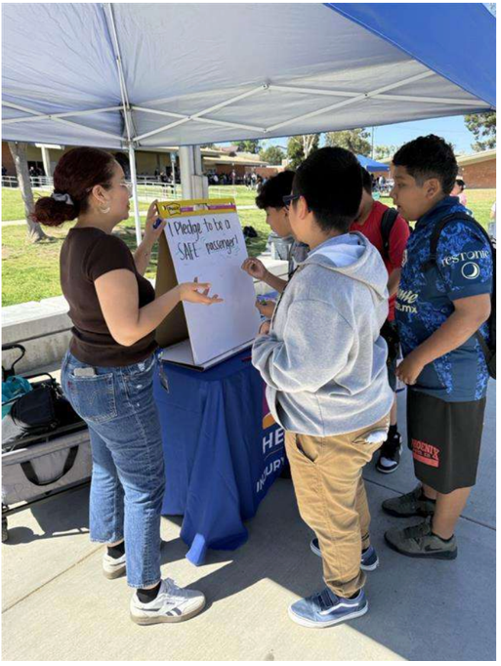

Riverside County Public Health Department Be Wiser Teen Impaired/Distracted Driving & Speeding Occupant Safety Program
The “Be Wiser” program is a countywide initiative that aims at reducing teen traffic fatalities and injuries. The inaugural 2025 Riverside County Youth Traffic Safety Summit brought together 63 youth and community members to address major teen safety issues and drive change within their schools and neighborhoods. The program built more than 20 partnerships with school districts and youth‑serving organizations to deliver bilingual, evidence‑based education to high‑risk teens and families. Be Wiser strengthened its curriculum by integrating Impact Teen Drivers’ storytelling videos, NHTSA research, OTS campaign materials, and hands‑on Drunk Busters activities. Using a Train‑the‑Trainer model, youth leaders conducted 46 peer‑led campaigns across 16 middle and high schools, reaching 26,405 individuals. Additionally, 48 educational presentations were held that reached 1,018 students, parents, community members, and law enforcement explorers. Thirteen partner organizations collaborated on social media campaigns, generating 106,556 impressions, while monthly newsletters reached over 500 readers.

University of California, Irvine Youth Thriving in Life Transitions with Transportation
UC Irvine’s Youth Thriving in Life Transitions with Transportation program collaborated with Ford Philanthropy and GHSA, to host a two‑day Ford Driving Skills for Life event in Anaheim. The event reached 297 participants, including 189 teens and 108 parents, and provided behind‑the‑wheel training focused on vehicle control, hazard recognition, and distracted driving prevention. Additional activities, led by partners such as the Santa Ana Police Department, included law enforcement interaction training and virtual reality simulations from the perspective of a bicyclist to underscore the importance of safe driving around people biking. An educational curriculum, developed through a partnership between the UCI School of Medicine’s B³ DrivSim Lab, UC Irvine Institute of Transportation Studies (ITS), and Getting Residents Engaged in Empowering Communities (GREEN‑MPNA), used interactive modules to explore how transportation intersects with health, education, and employment. Post‑program assessments showed significant gains in students’ understanding of teen brain development, risky driving behaviors, the Provisional Licensing Law, and safe transportation decision‑making, along with increased interest in transportation careers.
Motorcycle Safety

Hayward Police Department Ride to Live
The Hayward Police Department’s Ride to Live Motorcyclist Safety Education and Training Program included the first women’s-only class, after female riders desired a training environment focused on their specific needs. Officers provided personalized coaching, such as how to safely lift a fallen motorcycle and guide students using their own bikes. Participant feedback consistently informed course improvements, and demand for the training remains high.

Los Angeles County Public Health Department Motorcycle Safety and Reckless Driving Education Program
The Los Angeles County Department of Public Health advanced Vision Zero goals by significantly expanding outreach to reduce traffic-related deaths linked to street racing, reckless driving, and unsafe motorcycle behaviors. The department produced five safety videos with rider interviews, filmed at well‑known motorcycle destinations. A targeted digital campaign generated more than 1.1 million views, reaching a broad audience in only 18 days. Additional outreach included a partner toolkit and organic social media posts. Additionally, the department implemented a comprehensive Street Racing Prevention Education Program, hosting 39 activities that reached 2,299 community members. Powerful survivor testimonies brought the consequences of unsafe driving into sharp focus, reinforcing the critical need for storytelling to drive home the personal impacts to friends, families and communities.
Occupant Protection
California Highway Patrol Restraint Safety Education and Training
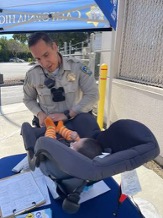
The California Highway Patrol’s occupant protection program provided families guidance on the correct use and proper installation of child safety seats. CHP personnel conducted 6,862 car seat installation inspections at 189 check‑up events. Throughout the year, CHP Area Offices operated weekly fitting stations where officers distributed grant‑funded car seats to families in need and provided personalized instruction to caregivers. In addition, the program expanded California’s certified safety network by training 121 new Child Passenger Safety (CPS) technicians and renewing certifications for 90 technicians. CHP staff held educational sessions in day care centers, preschools, and elementary schools, reaching 2,458 individuals, while booths and community presentations reached another 7,467 people.

Riverside County Department of Public Health Child Passenger Safety Program
The Riverside County Department of Public Health’s Child Passenger Safety Program made significant strides in strengthening child and senior transportation safety through comprehensive education, outreach, and partnerships. Over the grant year, the program held 75 educational workshops reaching more than 500 participants and distributed more than 250 no‑cost child safety seats to families in need. It conducted 12 checkup events and joined nine partner‑led events, expanding access to hands‑on seat‑installation support. To advance proper restraint use among children, the team implemented the 5‑Step Test in more than 10 elementary schools, engaging over 600 students. Additionally, Riverside County held three CPS Certification Courses, three Update Courses, one Renewal Testing Course, and a 2‑day Safe Travel for All Children course to support technicians and instructors. The program also provided 10 Roll Call trainings for law enforcement, strengthened hospital discharge practices, trained CarFit technicians, and hosted senior‑safety assessments.

San Diego County Health & Human Services Agency Keep ‘Em Safe Program
San Diego County’s Keep ’Em Safe (KES) Child Passenger Safety Program started California’s first‑ever Spanish CPST Training Curriculum. The program strengthened community mobility and safety through extensive outreach, training, and agency partnerships informed by comprehensive community needs assessments. KES collaborated with more than 450 partner agencies and, in coordination with the Pacific Safety Center (PSC), held car seat checkup events, community presentations, safety fairs, and car seat distribution events for families in need. KES distributed 888 car seats, hosted 60 safety checkup events, and educated over 2,000 families on proper child restraint use. Additionally, more than 80 CPS technicians received continuing education, and 10 advanced to CPST‑Instructor status, expanding statewide CPS expertise.

The Regents of the University of California on Behalf of its Davis campus Child Passenger Safety Program
UC Davis saw a significant need to advance child passenger safety for children with special transportation needs across Northern California. As the region’s only provider of specialized training, UC Davis delivered three Safe Travel for All Children (STAC) courses in Chico, Stockton, and Fairfield, each with waiting lists due to high demand. These two‑day enrichment courses equipped Child Passenger Safety Technicians with advanced skills to safely transport children with acute medical needs and long‑term neurodevelopmental conditions. The community car seat program provided 14 adaptive car seat check appointments, distributing adaptive supports including locking chest clips and a specialized transportation vest. UC Davis Health also conducted 190 car seat checkup appointments, distributing 194 car and booster seats to families in need. To expand accessibility, program materials were updated into 10 languages, supported by the UC Davis Medical Interpretation Department, enabling multilingual service delivery and improved outreach to diverse families.
Traffic Records/Roadway Safety
University of California SafeTREC, Berkeley Autonomous Vehicle Safety Perfections and Crash Data Accessibility
UC Berkeley SafeTREC made significant progress in advancing autonomous vehicle (AV) safety research and data transparency statewide. SafeTREC launched the Autonomous Vehicle (AV) Safety Dashboard, which provides geocoded crash maps, manufacturer‑reported mileage trends, and user‑friendly traffic data charts, which allow policymakers, practitioners, and the public to explore AV testing activity. To better understand public perceptions, SafeTREC surveyed 811 Bay Area residents, including drivers, pedestrians, cyclists, and passengers, with real‑world AV exposure. Results showed 61.5% of respondents trust AVs, with trust increasing alongside frequency of interaction. Passengers reported the highest confidence, with 72.5% trusting AVs and 91.5% feeling safe during their most recent ride, while other road users expressed more caution. Importantly, the top safety concern cited was unpredictable human behavior (55.4%), indicating that AV acceptance may depend more on managing human‑AV interactions than technological safety measures.

Los Angeles County Sheriff’s Department Traffic Records Improvement Projects
The Los Angeles County Sheriff’s Department (LASD) achieved a major modernization milestone by fully implementing an electronic crash‑reporting system and establishing a live data connection with the Statewide Integrated Traffic Records System (SWITRS). Within days, LASD had electronically submitted 445 complete crash reports, with all 24 stations fully operational on the new system. To support field‑based reporting, deputies were equipped with 50 new desktop computers, 400 tablets, and mobile printers, dramatically improving accuracy, reducing manual‑entry errors, decreasing report‑processing time, and allowing deputies to remain in the field longer. LASD implemented department‑wide training and comprehensive instructional materials. LASD will continue to refine the system based on user feedback and pursue additional data‑integration opportunities to further strengthen statewide traffic crash data reporting.
.
Napa Valley Transportation Authority Traffic Safety Data Project
The Napa Valley Transportation Authority (NVTA) developed a countywide Traffic Safety Data Project that combined driving‑behavior insights with traditional crash data to pinpoint high‑risk locations for all road users. The study identified extreme speeding, with some drivers exceeding 100 mph at all hours, as a persistent, primary risk factor across Napa County. It also highlighted risks to people walking and biking from drivers who braked or accelerated harshly, revealing behavioral safety issues before crashes occurred. NVTA analyzed every school zone and produced a ranked list, finding seven schools at higher risk, giving agencies a clear, proactive look at how to prioritize limited resources for near‑term safety improvements. The project further examined three focus areas flagged by community feedback and behavioral data to identify targeted actions. NVTA now has a browser‑based mapping tool to explore data, monitor conditions, and evaluate projects, enabling proactive decisions without waiting for crash trends to emerge after a crash occurs.
.
Emergency Medical Services

Gonzales Fire Department Regional Crash Response and Extrication Improvement Program
The Gonzales Fire Department significantly enhanced its emergency response capabilities by replacing decades‑old gasoline-powered hydraulic tools with a fully equipped eDraulic extrication tool set, also known as the “Jaws of Life.” In its first year, the new equipment was deployed in four vehicle extrications, demonstrating immediate life‑saving impact. The greatest accomplishment was the elimination of setup time at crash scenes, saving critical minutes. Reducing maintenance needs and cutting daily readiness checks by more than half allows more time for training and prevention activities. During both training and real incidents, the tool provided greater cutting power and improved maneuverability, reducing extrication time by eight minutes compared to traditional systems. This upgrade strengthened the department’s ability to respond swiftly and effectively to help crash victims.

Morro Bay Fire Department Regional Crash Response and Extrication Improvement Program
The Morro Bay Fire Department significantly enhanced its emergency response capabilities through a fully equipped modern extrication system known as the “Jaws of Life”, enabling dramatic reductions in rescue times. Extrication operations that previously exceeded 28 minutes were reduced to under five minutes, with the fastest completed in just three minutes, greatly improving outcomes during critical, time‑sensitive emergencies. Two frontline engines were upgraded with specially designed housing for the new equipment, allowing quicker access and faster deployment. The department also formalized extrication training by integrating a dedicated rotation that ensures every firefighter receives hands‑on training at least four times per year, which helps ensure firefighters are prepared when the equipment is needed to help crash victims. More than 250 community members saw an extrication demonstration highlighting the new equipment.
Police Traffic Services

Los Alamitos Police Department Selective Traffic Enforcement Program (STEP)
The Los Alamitos Police Department achieved a major traffic safety milestone by conducting its first DUI/Driver’s License checkpoint in more than a decade. Despite limited staffing and navigating new logistics with a checkpoint, the department successfully organized the operation with critical support from neighboring agencies. Seal Beach Police Department loaned a DUI trailer, while officers from Cypress, Westminster, and Seal Beach Police Departments provided on‑site assistance through collaborative enforcement efforts. The checkpoint screened 829 vehicles, resulting in 45 citations, including 10 unlicensed drivers, two drivers suspended/revoked license arrests, one misdemeanor warrant, one felony warrant, and four DUI arrests. Officers also conducted nine field sobriety tests and towed six vehicles. These outcomes highlight the effectiveness of a regional approach to impaired driving prevention.
California Highway Patrol El Protector Spanish Traffic Education Program IV
The California Highway Patrol’s El Protector program delivered culturally responsive traffic safety education to Spanish‑speaking communities. An estimated 40-million people were reached through 859 community events. A new educational pamphlet was developed and distributed statewide to Public Information Officers, who strengthened outreach further through extensive radio interviews and media engagement. The Community Outreach and Marketing Section (COMS) deepened community partnerships by hosting informational booths at major cultural and regional events, including the Sacramento Republic FC, Frontwave Arena, Latino Business Expo, Monterey Bay FC, Sacramento Salsa Festival, and the Yolo County Fair. CHP also participated in Sacramento Republic FC’s first youth clinic, distributing branded reflectors, bicycle lights, and reflective spoke tubes to promote increased visibility while riding.
California Highway Patrol Native-Tribal Traffic Education Program (TTEP)
The California Highway Patrol’s Native TTEP made significant progress in strengthening traffic safety outreach within Native American communities during its third year of implementation. A major milestone was the first tribal education outreach event in Oakland. The CHP participated in key cultural and community events, including the Washoe Powwow, 30th Annual Sacramento Contest Powwow, California Conference on American Indian Education, and the 61st Annual Klamath Salmon Festival. A new partnership with the Wilton Rancheria co‑owned Sacramento Republic FC expanded visibility through informational booths at home games. Through these combined efforts, Native TTEP enhanced community relationships and advanced traffic safety education across tribal communities statewide.

California Highway Patrol Speed Prevention Education and Enforcement Deterrence
The California Highway Patrol’s SPEED Prevention Education and Enforcement Deterrence Program made significant statewide impact by targeting speeding and aggressive driving, CHP enhanced enforcement capacity through new radar and lidar devices to issue more than 19,000 citations to drivers traveling over 100 mph, which resulted in 146 arrests. To increase visibility and deterrence, CHP deployed radar trailers 1,371 times and conducted 100 enforcement operations. An additional 335 operations focused on speeding, unsafe turns, wrong‑way driving, unsafe passing, and following too closely. These operations led to 9,970 enforcement stops and 9,157 citations. The program also included 60 speed safety presentations reaching 2,751 people and 159 outreach events impacting 17,908 individuals.
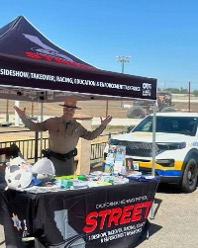
California Highway Patrol Sideshow, Takeover, Racing, Education and Enforcement Taskforce (STREET)
The California Highway Patrol’s Sideshow, Takeover, Racing, Education and Enforcement Taskforce (STREET) trained 883 personnel from CHP and allied agencies to identify modified vehicles and enforce laws targeting illegal and unsafe operations, significantly expanding statewide enforcement capacity. The CHP conducted 187 traffic safety presentations and outreach events, reaching nearly 23,000 people with education about the dangers of high-risk driving behaviors. Sixty-two specialized operations focused on street racing, sideshows, and primary crash factors such as unsafe speed, impaired driving, improper turning and unsafe lane changes. These operations resulted in 2,164 enforcement stops, 1,237 citations, and 278 arrests. A statewide public‑service announcement video further amplified outreach, reinforcing the program’s safety message to 178,000 people.